
Beyond the Formula: How Classical Christian Education Prepares Students for STEM
When parents think about preparing their children for careers in science, technology, engineering, and mathematics (STEM), they often picture advanced math courses, science labs, computer programming, and hands-on experiments. These are certainly important components of a strong STEM education. But what if some of the most valuable preparation for success in these fields begins long before a student encounters a college-level calculus course or steps into an engineering lab?
The truth is that success in STEM requires much more than technical knowledge. It requires the ability to think deeply, ask meaningful questions, recognize patterns, evaluate evidence, solve unfamiliar problems, and communicate complex ideas clearly. It requires intellectual curiosity, perseverance, creativity, and the wisdom to understand how knowledge fits into a larger picture.
These are precisely the kinds of abilities that classical Christian education seeks to cultivate.
At Providence Classical School, we believe that a strong education should prepare students not only to acquire knowledge but also to use it wisely. Through the study of the liberal arts and sciences, students develop habits of thinking, learning, and communicating that serve them well in every academic discipline — including the increasingly complex and demanding world of STEM.
STEM Requires More Than Technical Knowledge
It is easy to assume that students interested in STEM should spend nearly all their academic time focused on mathematics and science. Certainly, a strong foundation in these subjects is essential. But consider what a scientist, engineer, physician, or computer programmer actually does.
A scientist must formulate questions, design experiments, interpret results, evaluate competing explanations, and communicate discoveries. An engineer must identify problems, consider constraints, develop creative solutions, and explain why a particular design is effective. A computer programmer must think logically, recognize patterns, troubleshoot errors, and translate complex problems into clear, workable instructions.
These professionals rely on much more than subject-specific knowledge. They depend on critical thinking, careful reasoning, effective communication, and the ability to approach unfamiliar challenges with confidence.
Technical skills may help a student get started, but the ability to think well helps that student continue learning, adapt to new discoveries, and solve problems that have never been encountered before.
This is where classical Christian education offers a distinctive advantage.

Learning How to Think, Not Just What to Know
One of the defining characteristics of classical education is its emphasis on teaching students how to think. Rather than simply memorizing information and repeating answers, students are challenged to understand why things are true, how ideas relate to one another, and what conclusions can reasonably be drawn from the evidence.
As students progress through Grammar, Logic, and Rhetoric School, they develop increasingly sophisticated intellectual skills.
In Grammar School, students build a foundation of knowledge. They learn to observe carefully, acquire information, recognize patterns, and develop a vocabulary for understanding the world around them. Memorization, repetition, and foundational knowledge are not ends in themselves; they provide the building blocks for more advanced learning.
In Logic School, students learn to reason carefully. They examine arguments, identify relationships between ideas, recognize logical fallacies, and distinguish sound conclusions from faulty reasoning. They begin to ask not simply what is true, but why it is true.
In Rhetoric School, students learn to articulate and defend ideas persuasively. They synthesize information, evaluate different perspectives, construct thoughtful arguments, and communicate their conclusions with clarity and confidence.
These stages of intellectual development have direct applications in STEM. Whether a student is analyzing a scientific theory, interpreting a mathematical proof, evaluating research findings, or developing a technological solution, the ability to gather knowledge, reason logically, and communicate conclusions is indispensable.
A student who has learned how to think is better equipped to learn what has not yet been taught.
The Power of Asking Good Questions
Scientific discovery begins with curiosity. Before there can be an experiment, there must be a question. Before there can be a breakthrough, someone must be willing to wonder whether something could be understood differently.
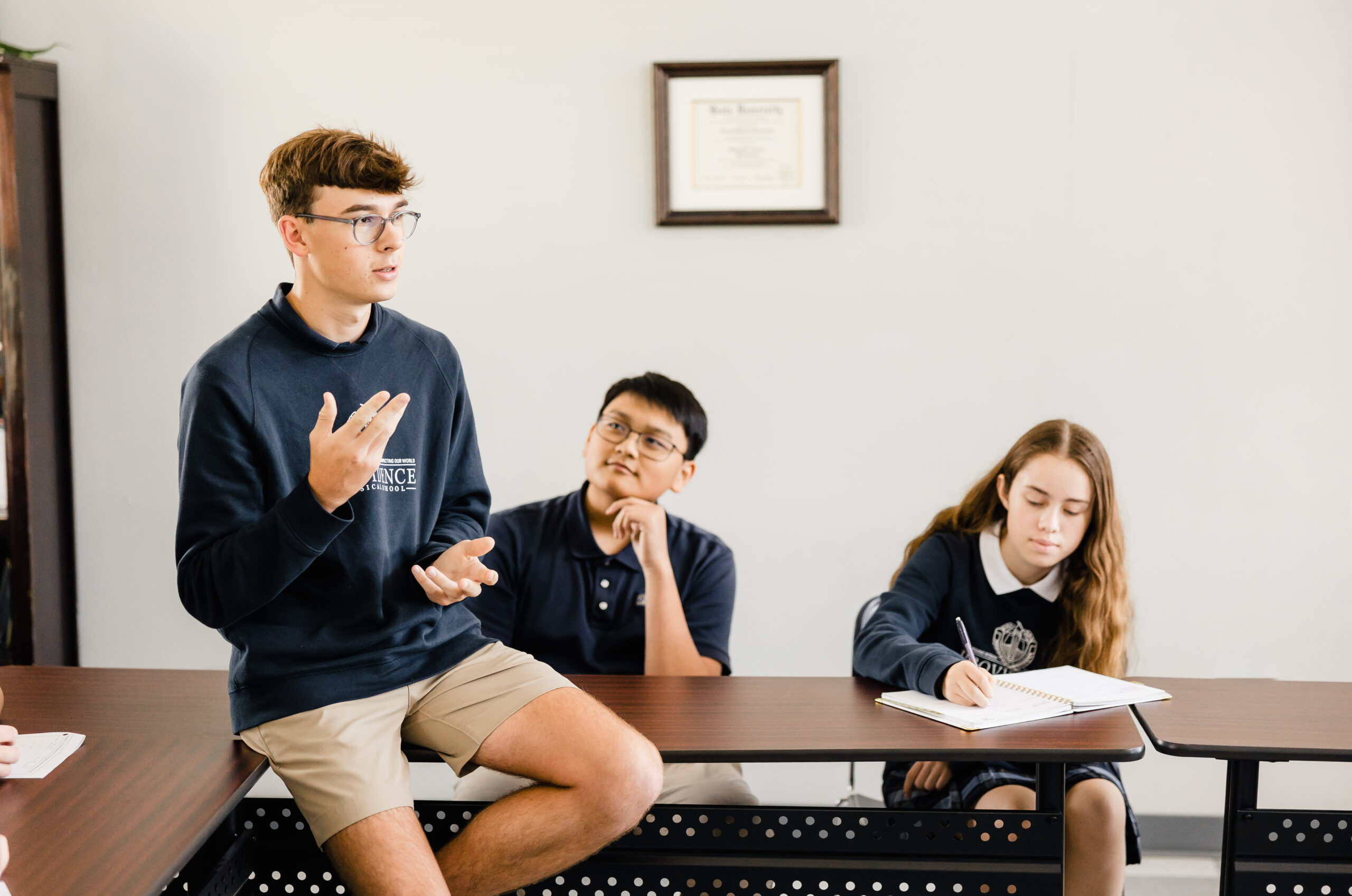
Classical Christian education encourages students to become thoughtful questioners. Through the study of great books, meaningful discussions, and the examination of ideas across disciplines, students learn to look beyond surface-level answers. They are encouraged to investigate, make connections, challenge assumptions, and pursue understanding.
This kind of intellectual curiosity is essential in STEM fields, where progress often depends on asking better questions rather than simply finding faster answers.
Consider the student who encounters an unexpected result in a science experiment. Instead of immediately dismissing it as a mistake, that student has the opportunity to investigate what happened, examine the variables, and consider whether the results reveal something worth exploring.
Or consider an engineering student faced with a problem that has no obvious solution. The ability to approach the challenge from multiple angles, recognize underlying assumptions, and consider possibilities beyond the most familiar answer can make all the difference.
A classical education cultivates a love of learning that extends beyond the classroom. It teaches students to see the world as something worth exploring and understanding.
“At PCS, I developed very strong first principles in math and science as well as a fantastic education in the liberal arts and the Bible. What has stuck out to me in college is how important communication is in engineering. My education at Providence has given me a huge advantage in this area, as well as the strong technical background required to successfully engage in problem solving, and for that I am very grateful.”
Ryan Fowler, PCS Class of 2024
Electrical Engineering Major at Texas A&M University
“Early in my career as an engineer working for a scientific research company, I was told by my boss that the most important skill I could develop to contribute to my success at the company was the ability to write well. I’m thankful to be able to pass that knowledge on to my students.”
Christian Corley
PCS High School Math & Science Teacher
Writing and Speaking Well Are Essential STEM Skills
Writing may not be the first skill that comes to mind when considering STEM preparation, but it is one of the most important. Equally important is the ability to communicate ideas confidently and clearly through public speaking.
Scientists write research papers. Engineers prepare technical reports. Physicians document findings and communicate treatment recommendations. Technology professionals create documentation, explain processes, and collaborate with teams. Across virtually every STEM discipline, professionals must communicate complex information accurately and effectively — both in writing and in conversation.
A person may have an excellent idea, make an important discovery, or develop an innovative solution, but if that person cannot explain it clearly, the value of that work is limited.
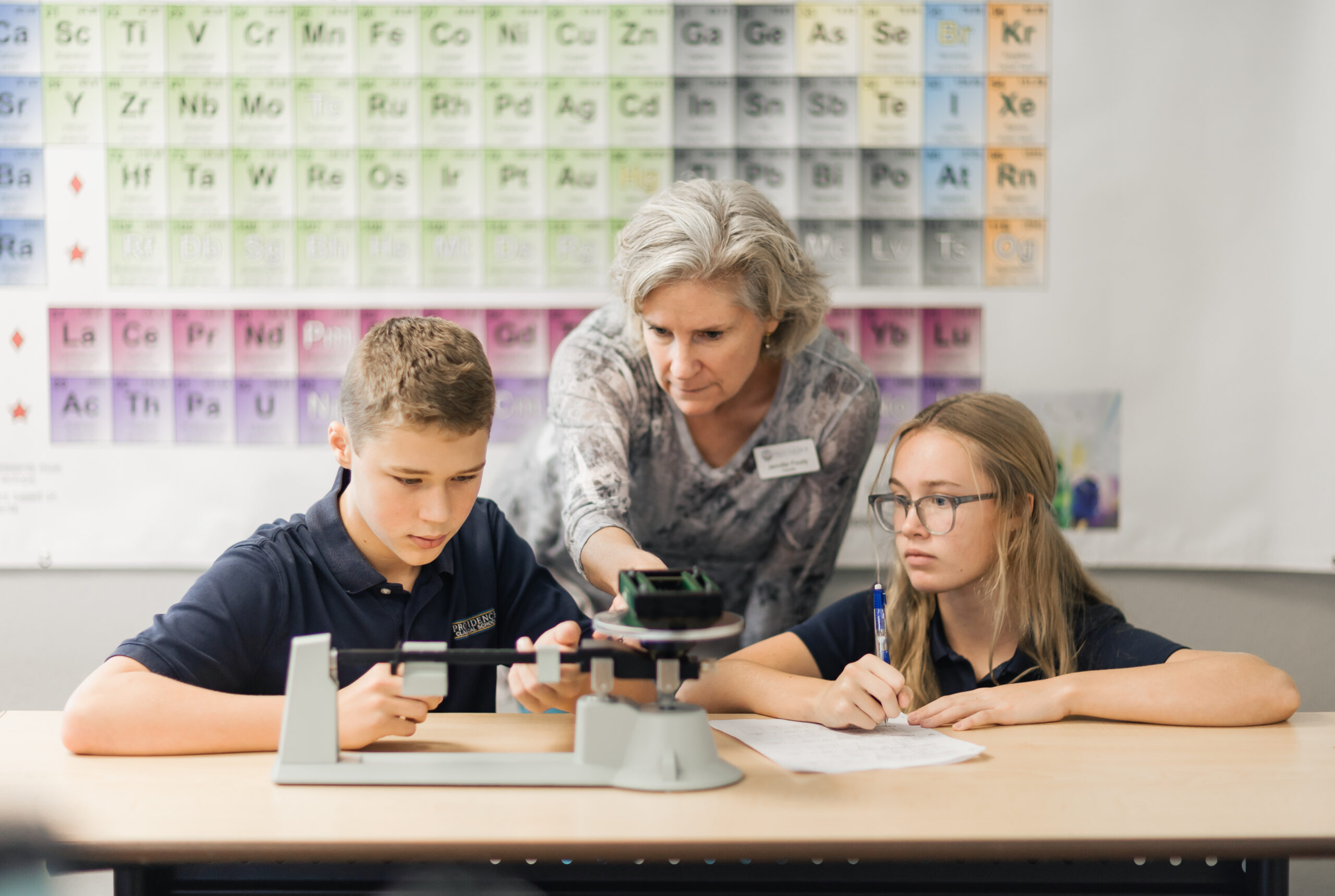
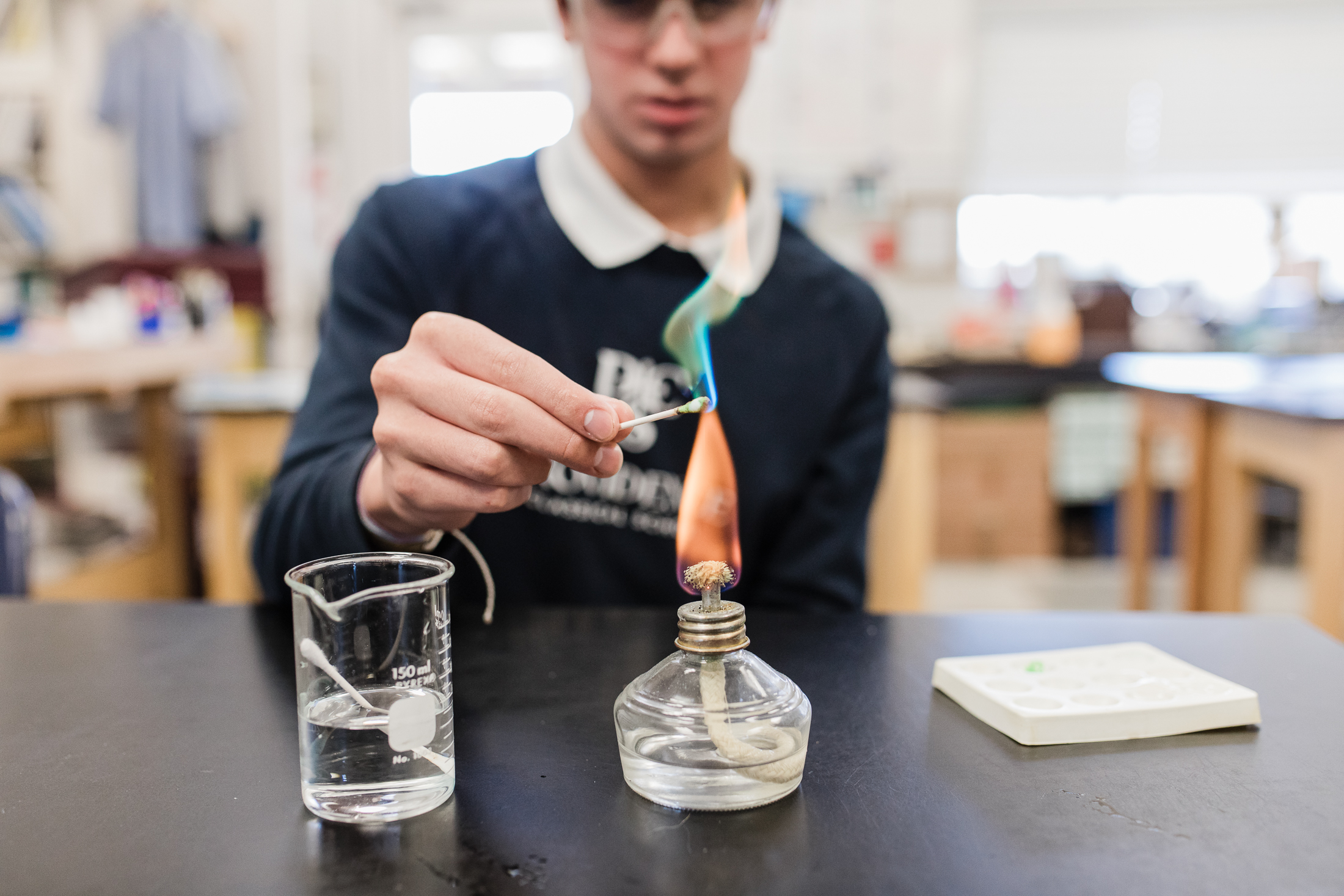
At Providence, students develop their communication abilities throughout their education. They learn to organize their thoughts, construct logical arguments, support claims with evidence, and express ideas with precision. They also regularly have opportunities to participate in discussions, present their ideas before an audience, and teach others what they have learned. As they advance, they encounter increasingly demanding assignments that require careful research, analysis, synthesis, and effective communication. This includes writing thorough lab reports in upper-level science classes.
The culmination of this development is the Senior Thesis, in which students research and write an in-depth thesis, present their findings, and defend their arguments before an expert panel and an audience. This experience challenges students to demonstrate not only what they know but also how well they can articulate their thinking, respond thoughtfully to questions, and defend their conclusions with clarity and confidence.
These skills transfer naturally to scientific and technical communication, where professionals must often present research, explain findings, defend proposals, and make complex information understandable to others.
Writing and speaking also strengthen thinking itself. The process of explaining an idea — whether on paper or aloud — forces students to examine whether they truly understand it. It exposes gaps in reasoning, reveals unsupported assumptions, and requires them to organize complex information into a coherent whole.
In other words, learning to write and speak well is also learning to think well.
Analyzing Ideas, Evidence, and Data
STEM disciplines are built on observation, evidence, and analysis. Students must learn to distinguish reliable information from unreliable information, identify patterns, interpret data, and draw conclusions that are supported by evidence.
These are not skills that belong exclusively to science and mathematics classrooms.
Throughout a classical education, students regularly encounter challenging texts, competing ideas, historical accounts, philosophical arguments, and questions that require careful investigation. Through courses like Logic, Debate, Ethics, and Apologetics, they learn to examine the evidence behind a claim, consider the assumptions being made, and determine whether an argument is logically sound.
The same habits of analysis are essential when interpreting a scientific study, evaluating statistical information, or determining whether a proposed solution will actually work.
Students who have practiced examining ideas critically are less likely to accept information simply because it is presented confidently or appears convincing at first glance. Instead, they learn to ask important questions:
- What evidence supports this conclusion?
- Are there assumptions that need to be examined?
- Does the reasoning follow logically?
- What information might be missing?
- Are there alternative explanations worth considering?
In an age when information is readily available but not always reliable, these habits are especially valuable. STEM students need more than access to data; they need the discernment to understand what the data actually means.
Connecting Knowledge Across Disciplines
One of the greatest strengths of classical education is its emphasis on the interconnectedness of knowledge.
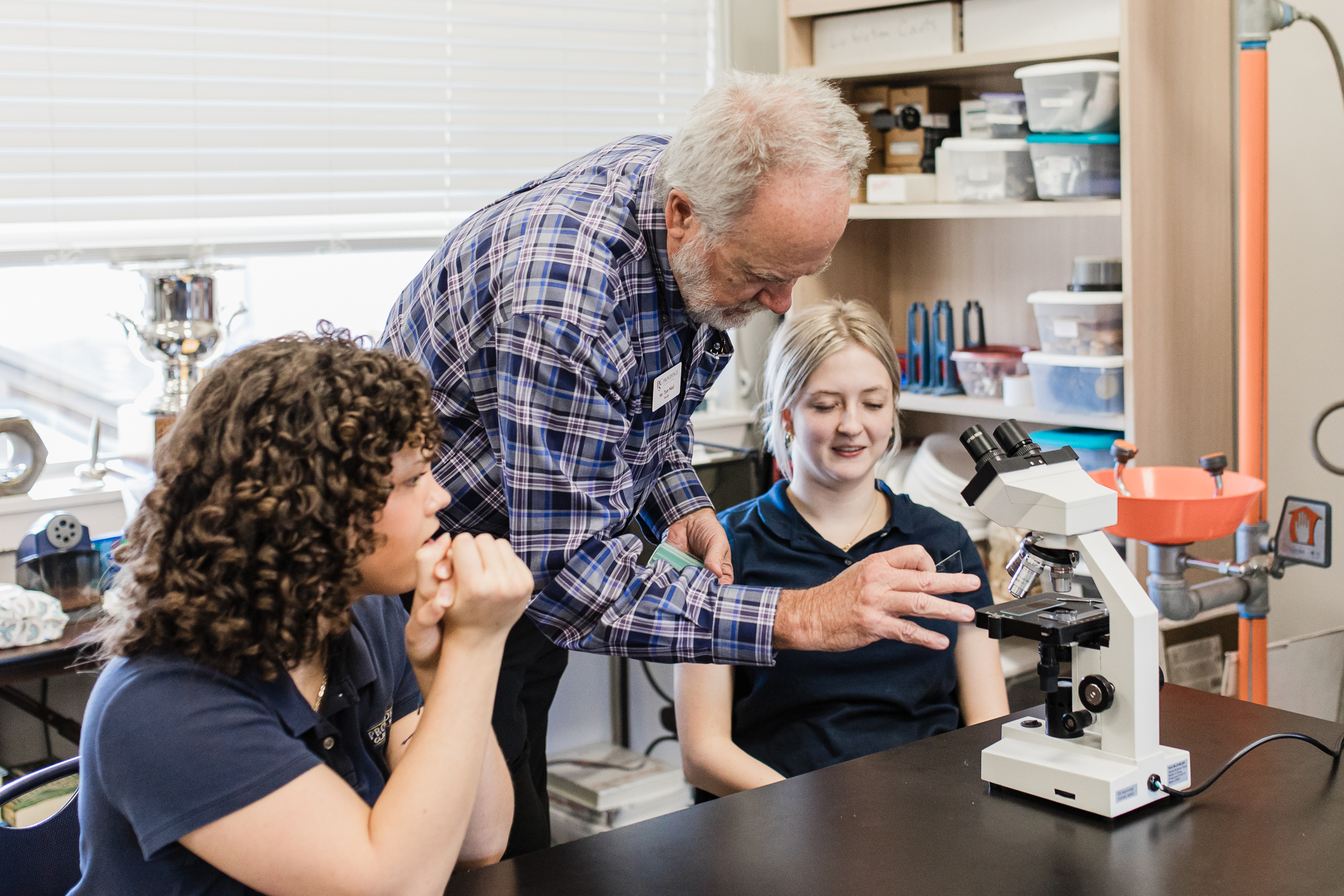
In a traditional liberal arts education, students encounter the arts of language and reasoning — Grammar, Logic, and Rhetoric — alongside the mathematical arts of Arithmetic, Geometry, Music, and Astronomy (which we interpret as all sciences, including biology, physics, chemistry, anatomy, computer science, engineering, and more). These disciplines help students understand both how to communicate and reason and how to recognize the order, patterns, and relationships present in the world.
This broad approach to learning helps students see that knowledge is not divided into isolated academic compartments.
For example, mathematics connects to music, physics, and chemistry. Geometry connects to architecture and art. History connects to the development of scientific ideas and technological innovation. Literature and philosophy raise questions about human nature, ethics, and the responsibilities that accompany knowledge.
When students recognize these connections, they develop a richer understanding of the subjects they study.
This interdisciplinary perspective is particularly valuable in modern STEM fields, where innovation frequently occurs at the intersection of disciplines. Medical advancements may involve biology, chemistry, engineering, and computer science. Environmental research may draw on mathematics, physics, geography, and public policy. Artificial intelligence raises questions not only about computer programming but also about philosophy, ethics, what it means to be human, and whether unlimited innovation is beneficial for mankind and our planet.
Students who have learned to make connections across disciplines are better prepared to approach complex problems that do not fit neatly into a single subject area.

Developing Perseverance and Intellectual Humility
Not every problem has an immediate solution. Experiments fail. Equations take time to understand. Computer programs contain errors. Engineering designs must be revised. Research often leads to more questions than answers.
Success in STEM requires perseverance — the willingness to work through difficulty, learn from mistakes, and continue pursuing understanding even when the answer is not immediately apparent.
Classical education regularly asks students to engage with challenging material. They read difficult books, wrestle with unfamiliar concepts, construct arguments, and work through problems that require sustained attention and diligence. They spend an entire school year working on their Senior Thesis and sometimes start over when they hit a dead end. They learn that meaningful understanding often comes through effort and that intellectual growth takes time.
A classical Christian education also places this pursuit of knowledge within a framework of humility. Students are reminded that truth is not something they create but something they discover. The world has an order and design that exists independently of our understanding of it, and there is always more to learn.
This perspective encourages students to approach their studies with both confidence and humility: confidence that difficult things can be learned and humility to recognize how much remains to be understood.
These are valuable qualities for anyone entering a demanding scientific or technical field.
“God has made everything beautiful in its time, and he has put eternity into man’s heart, yet so that he cannot find out what God has done from the beginning to the end.”
Ecclesiastes 3:11
Understanding the Responsibility That Comes With Knowledge
There is another important dimension of STEM preparation that is sometimes overlooked: wisdom.
Scientific and technological advancements have the power to transform the world. But the ability to create something does not automatically mean that it should be created, nor does the ability to solve a problem guarantee that the solution is good.
Consider the ethical questions surrounding artificial intelligence, genetic engineering, medical research, environmental stewardship, and emerging technologies. These issues require more than technical expertise. They demand thoughtful consideration of human dignity, moral responsibility, and the consequences of our decisions.
A classical Christian education seeks to develop students who understand that knowledge is a gift and that wisdom involves using that knowledge in ways that honor God and serve others.
By studying Scripture, philosophy, history, literature, and the great questions of human existence, students develop a framework for thinking about the purpose and implications of their work.
For a future scientist, engineer, physician, or technology professional, this foundation matters. Technical excellence is important, but it should be accompanied by integrity, discernment, compassion, and a commitment to the good of others.
We want students to be prepared not simply to advance their chosen fields but to make meaningful contributions to the world around them.
Preparing Students for What Comes Next
No one can predict exactly what the scientific and technological landscape will look like when today’s students graduate from college. Entire industries will change. New technologies will emerge. Some of the careers students eventually pursue may not even exist yet.
This reality makes it especially important to provide an education that extends beyond the mastery of today’s technical knowledge.
Students need the ability to learn independently, adapt to new challenges, evaluate unfamiliar information, communicate effectively, and approach complex problems with creativity and sound judgment.
A classical Christian education provides a strong foundation for these abilities. It develops students who know how to acquire knowledge, reason carefully, express ideas clearly, and pursue truth with curiosity and purpose.
At Providence Classical School, we believe that preparing students for the future means giving them more than a collection of facts or a checklist of academic requirements. It means cultivating the intellectual habits, moral character, and love of learning that will serve them throughout their lives.
Whether a student eventually pursues medicine, engineering, computer science, physics, mathematics, or another field entirely, the ability to think deeply, communicate clearly, and use knowledge wisely will always be valuable.
The goal of a classical Christian education is not simply to prepare students for their next academic step. It is to prepare them to become lifelong learners who can think well, pursue truth, and faithfully use their gifts to serve others — whatever discipline they choose to pursue.
“…what may be known about God is plain to them, because God has made it plain to them. For since the creation of the world God’s invisible qualities — His eternal power and divine nature — have been clearly seen, being understood from what has been made, so that people are without excuse.”
Romans 1:19-20
For more insight into the results of classical Christian education at Providence Classical School, watch our Senior Thesis film, and schedule a tour today!
Learn more about classical education on the Providence Classical School blog!
Science in the Classical Christian School
What are the Humanities? More than History in the Classical School
Is it Too Late for My Child to Start Classical Christian Education?