


Navigating Teen Fiction as a Classical Christian Parent
By Literary Lauren, a PCS Parent
Can you feel the thrill of summer? It’s coming.
Despite the unseasonably cold weather late spring this year, the heat will soon remind us that pool days are in our near future. One of my favorite things about Providence summers is that they are a full three months long. We cherish this extended time of rest, rejuvenation, and — of course — reading.
Can you hear the crinkly sounds of paper? Like presents being unwrapped at the end of the year, I like to imagine librarians, teachers, and parents everywhere feverishly scribbling across their parchment — erhum, I mean keyboards — to devise the perfect reading list for the students in their lives. We have a fantastic recommended reading list given out each summer at PCS, and I’ve already seen early drafts of a few nationally recognized ones.
A lot of these lists focus on younger students — Grammar stage and down. But my children are getting older… one headed to Rhetoric school, one in Logic, and one finishing up Grammar. I confess, as excited as I get for summer reading, there are a few unsettled nerves trying to twist their way into my gut.
Cue anxiety spiral.
What values and worldview are in the books my teen is recreationally reading? I know — I’ll read them all first. (Immediately unrealistic) How will I ever keep up? Common Sense Media? Hmm. Sometimes helpful. Sometimes not. Are they evaluating books from a classical Christian worldview? How will I know what conversations we should be having over dinner?

Photo credit: YakobchukOlena
I want my children reading — but how do I find books that challenge them while also honoring truth, beauty, and goodness? Are there even books being published these days that meet those standards? Gosh… why is the world this way?
Deep breaths.
If you’re like me — a fellow parent of a classically educated Christian student — you’ve likely found that navigating these questions becomes more difficult the older our children get. We don’t want to shelter our teens so much that they aren’t prepared to engage with the world outside of PCS. We believe there is such a thing as timeless wisdom, and we don’t want to shy away from stories that wrestle with the biggest questions of our day.
But we do want to equip our children to engage those stories thoughtfully—to read with discernment, to ask good questions, and to recognize what aligns with what is true.
And that raises a very practical problem: how do we do that if we don’t know what’s in the books?
I am paying close attention and I am seeing a wide range of content being placed in front of kids these days — from crass language to graphic violence to increasingly explicit sexual material. Of all of these, I find myself most concerned about the last category because of how consistently and widely it appears in the books many teens are reading during such formative years.
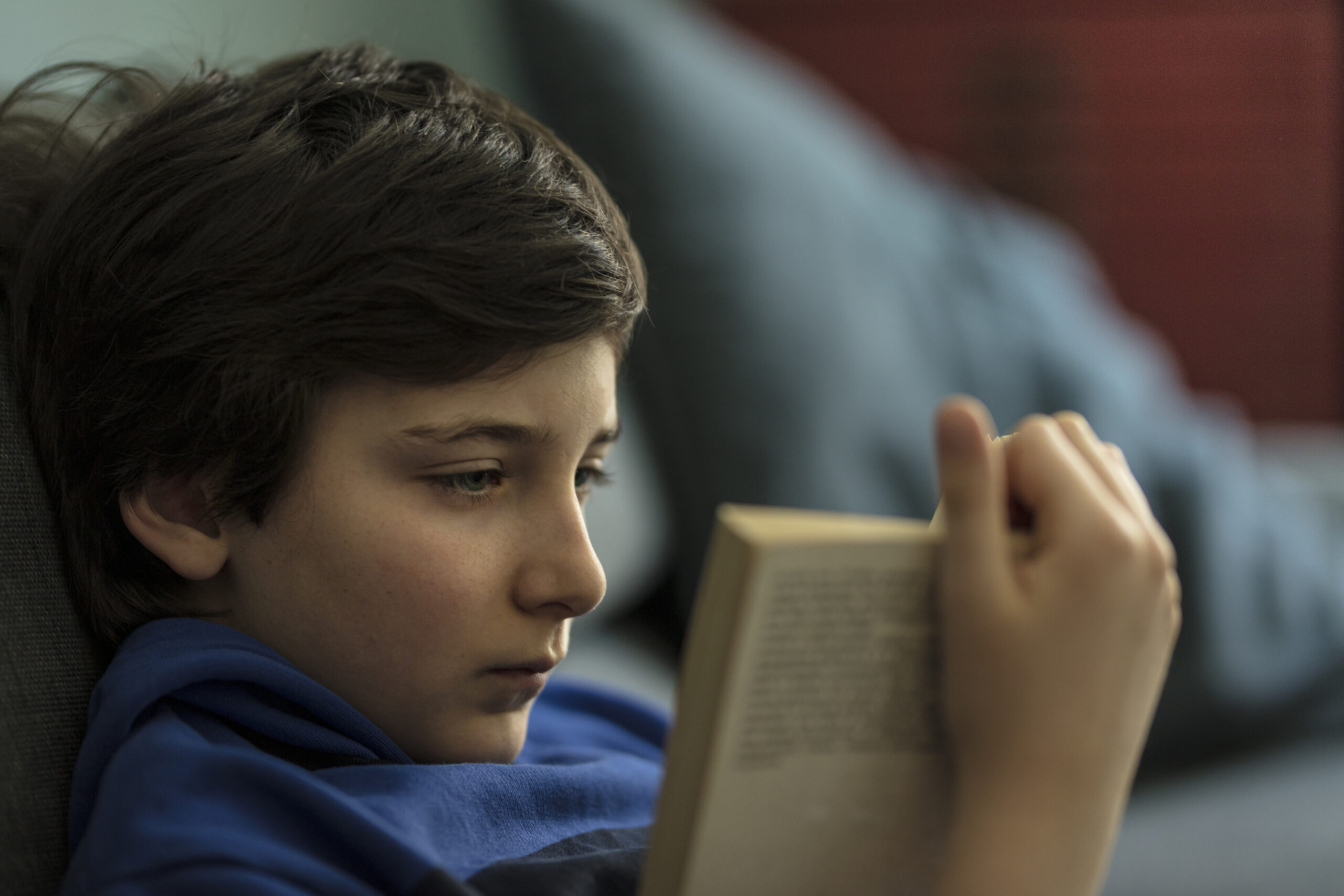
Photo credit: Matteo Lavazza Seranto
Let me explain.
There are hundreds of books being placed in front of our teens each year through social media, bookstores, and peer recommendations. And I’ve noticed a clear pattern — especially among teen girls. (Boy parents, hang on. This applies to you, too.) The romance and romantic-fantasy genres are far and away the most popular.
And that, in itself, isn’t a bad thing.
Stories about love, sacrifice, longing, and commitment are some of the most powerful stories we can tell. From a classical perspective, rightly ordered love sits at the very heart of truth, beauty, and goodness.
But here’s where my concern begins to grow.
In YA, romance is no longer simply about affection or even emotional intimacy — it often becomes physically explicit in ways that outpace a teen’s emotional and spiritual formation. I’ve seen everything from suggestive dialogue to scenes described with a level of graphic detail that would have once clearly placed the book in the erotica adult category. (Yes, I’m seeing this in teen fiction. You read that right.)
And here’s the clencher — listen up, boy parents — in most modern YA titles, romance appears outside of just the romance and romantasy genres. Our teen boys might not be hunting for a romance novel but I assure you, they are impacted too. After all, we’ve trained all our classical Christian students to be readers. This sexualized depiction of romance in YA novels affects all of our teens, regardless of their gender.
And because these stories are compelling (they’re meant to be), they don’t just entertain — they form expectations. They shape how young readers begin to think about love, relationships, and even their own desires.
Because romance speaks so directly to the heart, it carries a unique power — not just to influence what our teens think, but what they begin to want.
That’s what gives me pause.

Photo credit: Youngoldman
In some cases, the line between teen and adult content becomes uncomfortably thin. Frankly, indistinguishable. And over time, that can create a natural pathway toward increasingly mature material — often without much reflection or guidance along the way.
What your teen reads is, of course, up to you. But I’ve found that in many cases, parents simply don’t know what’s in the books their children are reading.
So — I built something to help.
I’ve created a database of commonly read YA and MG (middle grade, ages 9–13) titles and assigned each a label indicating the type of content within the book. At launch, there are 100 rated titles.
I encourage you to sift through this list carefully and read the labels thoughtfully. It’s important to note that I used my own discretion when assigning them, and in most cases, I do err on the side of caution when it comes to protecting a minor’s innocence.
My hope is that this resource serves your family as you navigate these complex reading years — not as a final authority, but as a starting point.
Because ultimately, the goal isn’t just to monitor what our children are reading — it’s to enter into those stories with them. To ask better questions. To have richer conversations. To help them grow in wisdom and discernment as they engage with the world around them.
My prayer is that we are able to thoughtfully shepherd our children’s hearts the entire time they are under our roofs—and that tools like this simply help us do that with a little more clarity and confidence.
Please know this list is not comprehensive, nor is it sponsored. I am simply a fellow classical Christian parent who would love more eyes on the reading content available to teens today. I update it every few months, so check back often. And if you have questions about adding certain books to this list, look out for a form to do so.
I hope this blesses you!
Happy Summer Reading!
And on that note, here are several of my recommended reads for your romance-loving teens! Age recs are my own.
Fantasy & Fantasy Romance
- Sunrise on the Reaping by Suzanne Collins (ages 14+)
- Caraval by Stephanie Garber (ages 15+)
- Sorcery of Thorns by Margaret Rogerson (ages 14+)
- The Lunar Chronicles by Marissa Meyer (ages 14+)
- What The River Knows by Isabel Ibanez (ages 14+)
- The Girl The Sea Gave Back by Adrienne Young (age 16+)
- Red Queen by Victoria Aveyard (age 14+)
- Legend by Marie Lu (ages 13+)
Contemporary Romance
- Better Than The Movies by Lynn Painter (ages 15+)
- P.S. I Like You by Kasie West (ages 15+)
- This Time Its Real by Ann Liang (ages 15+)
- Happily Ever Afters by Elise Bryant (ages 14+)
For more information on classical Christian education at Providence Classical School, watch our film, and schedule a tour today!
Learn more parenting tips on the Providence Classical School blog!
Paper vs. Screens: What’s the Best Way to Teach Kids to Read?
Ready for School: 8 Ways to Prepare Your Child for Pre-K and Kindergarten
7 Tips for Listening Well to Your Teenager
Header Photo Credit: seb_ra